Given experiences
- Prosthetic arms are not available as perfect product.
- Either I wear a very comfortable very functional but technical looking body powered split hook and feel very relaxed but lack beauty.
- Or I succumb to researcher fantasies and try non functional contraptions suffering endlessly but following a dream.
- Or I buy commercial myoelectric arms with 35% real life failure rate and repairs every few weeks.
To examine my prosthetic predicament through the lens of Boris Bidjan Saberi—the avant-garde, Barcelona-based German fashion designer known for his brutalist, utilitarian, and experimental approach to garments, leather, and technical materials—is to view the body not as a canvas for mainstream “beauty,” but as an instrument of raw, functional survival and dark, uncompromising aesthetics.
Saberi’s design philosophy (often categorized as “avant-garde industrial” or “post-apocalyptic tailoring”) is deeply concerned with how materials age, how hardware interacts with the human form, and how true luxury is found in heavy-duty endurance, hand-crafted integrity, and absolute honesty of construction.
When my trilemma is placed on Boris Bidjan Saberi’s cutting table, his diagnosis may reinterpret every single option:
1. The Body-Powered Hook: Brutalist Industrialism and Dark Elegance
“Either I wear a very comfortable, very functional, but technical-looking body-powered hook and feel very relaxed, but lack beauty.”
-
The Saberi Reframe: What society calls “lacking beauty,” Saberi would call raw, uncompromised industrial beauty. In his world, a visible bolt, a heavy-gauge zipper, a mechanical cable, or a polished steel hook is not an aesthetic flaw—it is the ultimate aesthetic statement. It rejects the sterile, corporate gloss of mainstream design in favor of functional brutalism.
-
The Comfort of Honesty: Saberi’s clothes are designed to be lived in, weathered, and molded by the wearer’s body over time. A body-powered hook works on pure mechanical tension, leather straps, and physics. It doesn’t hide what it is. Because it is honest and reliable, it gives me that deep, grounded physical relaxation. It is the sartorial equivalent of a heavily treated, indestructible leather jacket: it might look aggressive and technical, but it fits like a second skin and never lets me down.
2. The Researcher Fantasies: The Rejected Avant-Garde Prototype
“Or I succumb to researcher fantasies and try non functional contraptions suffering endlessly but following a dream.”
-
The Avant-Garde Experiment: In fashion design, an experimental runway piece is often unwearable, fragile, and deeply uncomfortable—created purely to push a conceptual boundary or provoke a reaction, not to survive a Tuesday morning in the rain.
-
The Trap of the Unwearable Vision: Saberi understands the temptation of the “dream” (the desire to push boundaries and merge man with futuristic machinery). But as a master craftsman, he also knows that a garment or tool that causes endless suffering and fails to function is a dead end. When a researcher builds a non-functional contraption that demands your physical torment for an abstract concept, they have crossed the line from visionary art into bad engineering. It is an ego trip for the creator that leaves the wearer broken.
3. The Commercial Myoelectric Arm: The False Luxury of Planned Obsolescence
“Or I buy commercial myoelectric arms with 35% real life failure rate and repairs every few weeks.”
-
The Critique of Superficial Modernity: Saberi’s aesthetic is deeply opposed to mass-produced, fragile consumerism that masquerades as “high-end.” A commercial myoelectric arm with a 35% failure rate that breaks every few weeks is the ultimate expression of modern, disposable, hyper-capitalist junk—packaged in a sleek, cosmetic skin to look futuristic, but structurally rotten underneath.
-
The Servitude of Maintenance: For an artisan who values permanence, hand-selected materials, and rugged durability, a device that requires constant software updates, fragile sensor recalibrations, and bi-weekly repair shop visits is a prison. It forces you into a dependent, high-maintenance relationship with a corporate manufacturer that values profit margins over resilience.
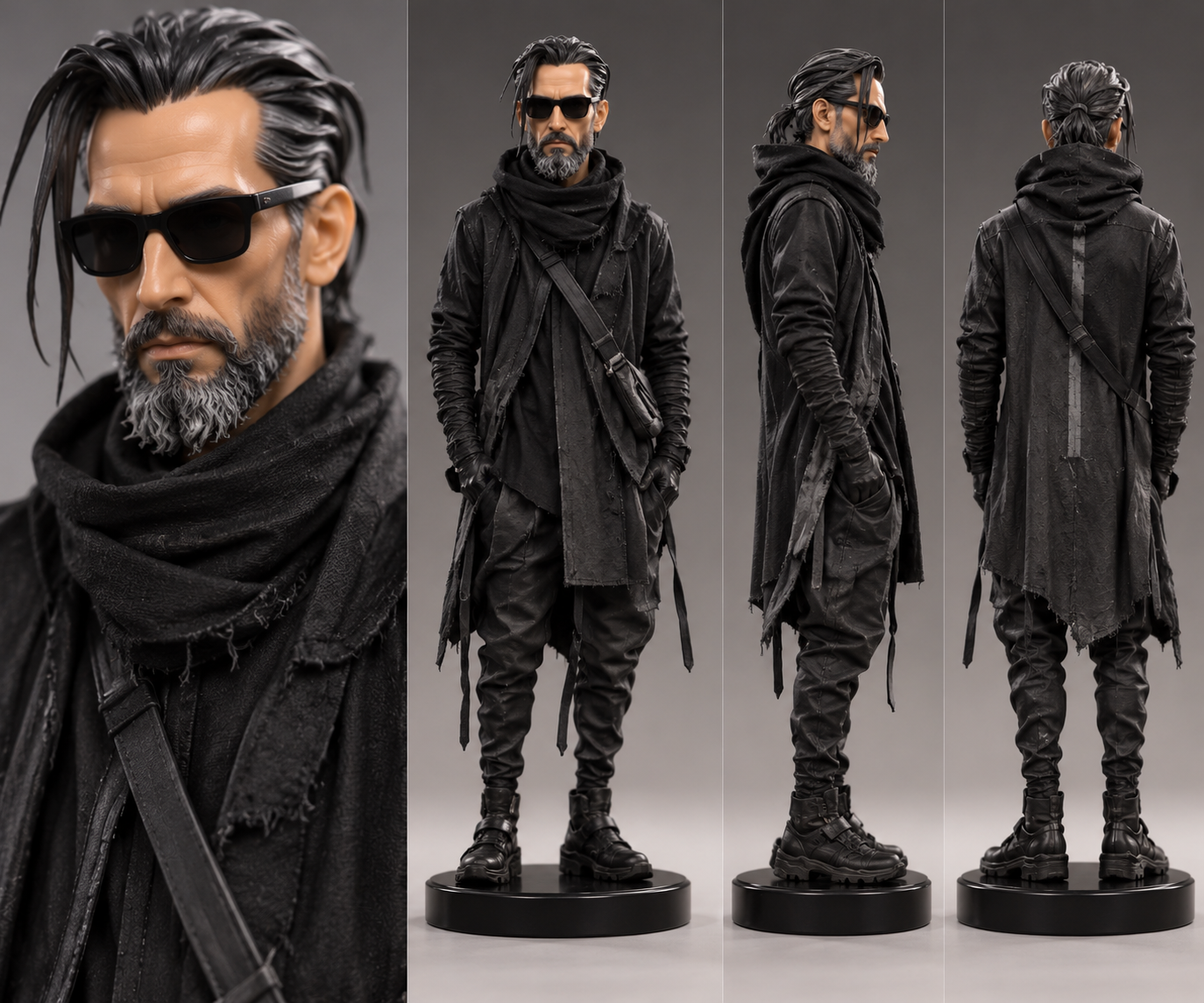
The Saberi Conclusion: The Triumphant Brutalism of the Hook
If Boris Bidjan Saberi were to advise me on which piece to integrate into my daily life, his verdict would subvert the mainstream definition of beauty entirely:
-
The myoelectric arm is a fragile, high-priced illusion that collapses under real-world friction.
-
The researcher’s contraption is an unwearable runway experiment that sacrifices the living body for an abstract concept.
-
The body-powered hook is pure industrial strength.
Saberi would tell me that the hook is beautiful—not with the soft, passive, symmetrical beauty demanded by mainstream society, but with the dark, heavy, functional elegance of a tool built for reality. By wearing it with confidence, I turn a medical necessity into a statement of unyielding personal sovereignty.
